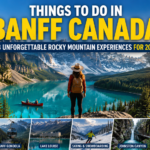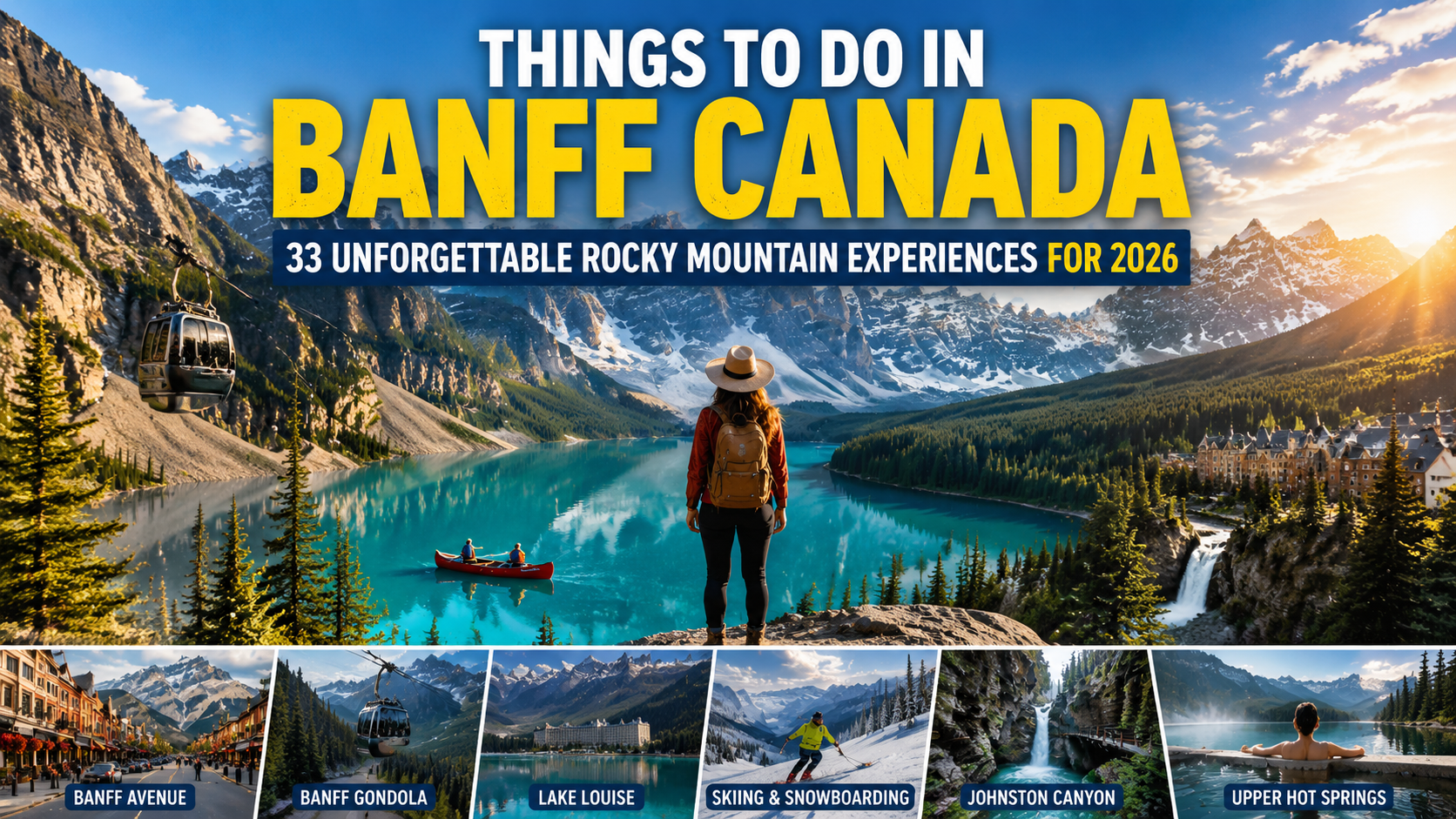
Things to Do in Banff Canada
Banff is the kind of place that makes you stop mid-sentence and simply look around. Towering Rocky Mountain peaks rise above turquoise lakes, pine forests stretch into the distance, and wildlife sightings can turn an ordinary drive into a memorable adventure. For travelers searching for the best Things to Do in Banff Canada, the biggest challenge is not finding something to do. It is deciding what to leave out.
From the famous shores of Lake Louise and Moraine Lake to scenic mountain roads, peaceful hiking trails, relaxing hot springs, winter adventures, and charming downtown streets, Banff offers an impressive mix of nature and culture. Banff National Park is Canada’s first national park and forms part of the Canadian Rocky Mountain Parks UNESCO World Heritage Site.
This guide covers the best places to visit, outdoor adventures, family activities, seasonal experiences, transportation tips, costs, where to stay, food, safety advice, hidden gems, and practical planning tips to help you build a better Banff itinerary.
Table of Contents
- Why Visit Banff Canada?
- Best Things to Do in Banff Canada
- Explore Banff Avenue
- Ride the Banff Gondola
- Relax at Banff Upper Hot Springs
- Visit Lake Louise
- See Moraine Lake
- Hike Johnston Canyon
- Explore Lake Minnewanka
- Visit Bow Falls
- Drive the Bow Valley Parkway
- Explore the Icefields Parkway
- See Peyto Lake
- Visit the Cave and Basin
- Go Hiking
- Enjoy Canoeing and Kayaking
- Go Skiing and Snowboarding
- Look for Wildlife
- Try Winter Activities
- Best Time to Visit Banff
- Banff Weather
- How to Reach Banff
- How to Get Around Banff
- Where to Stay in Banff
- Food and Restaurants
- Banff Nightlife
- Shopping in Banff
- How Much Does a Banff Trip Cost?
- Family Travel in Banff
- Solo Travel in Banff
- Banff for Couples
- Hidden Gems in Banff
- Best Photography Spots
- Best Day Trips from Banff
- A Perfect 3-Day Banff Itinerary
- Local Tips for Visiting Banff
- Travel Mistakes to Avoid
- What to Pack for Banff
- Frequently Asked Questions
- Conclusion
Why Visit Banff Canada?
Banff combines the best parts of a mountain vacation in one destination. You can spend your morning hiking beside a glacial lake, your afternoon exploring a mountain town, and your evening soaking in warm mineral water while looking at the Rockies.
The scenery is the obvious attraction, but Banff offers much more than beautiful views. The national park has more than 1,600 kilometres of maintained trails and more than 190 kilometres of mountain biking trails, along with opportunities for paddling, fishing, skiing, snowshoeing, wildlife viewing, and photography.
Another advantage is variety. You do not have to be an experienced hiker or adventure traveler to enjoy Banff. Families can explore easy trails, couples can enjoy scenic drives and hot springs, solo travelers can join guided experiences, and serious outdoor enthusiasts can spend days exploring the backcountry.
Best Things to Do in Banff Canada
If you only have a few days, start with Banff’s classic attractions. These experiences showcase the landscapes and activities that make the Canadian Rockies so special.
Explore Banff Avenue
Begin your trip in the heart of downtown Banff. Banff Avenue is easy to explore on foot and offers a relaxed introduction to the town.
Walk past colorful shops, browse outdoor gear stores, stop for coffee, or enjoy a meal with mountain views. The surrounding streets are also worth exploring, especially when you want a slower break between outdoor adventures.
For first-time visitors, downtown Banff is an excellent base because many restaurants, hotels, shops, and transportation options sit within easy reach.
Ride the Banff Gondola
One of the most popular ways to enjoy the Rockies without committing to a long hike is the Banff Gondola.
The ride takes you up Sulphur Mountain, where panoramic views open across the Bow Valley and surrounding peaks. Once at the top, take time to walk along the summit boardwalk and enjoy the mountain scenery.
Try to arrive early or book ahead during busy periods. The experience is especially memorable on a clear day when visibility stretches across the surrounding landscape.
Relax at Banff Upper Hot Springs
After a day of hiking, there may be no better way to slow down than soaking in the Banff Upper Hot Springs.
The mineral-rich pools sit on the side of Sulphur Mountain and offer impressive mountain surroundings. The attraction operates year-round and is located just minutes from downtown Banff.
This is an excellent choice for couples, families, and travelers who want to add a relaxing experience to an active itinerary.
Visit Lake Louise
Lake Louise is one of the most recognizable places in the Canadian Rockies. Its vivid blue-green water, mountain backdrop, and surrounding hiking trails make it a must-see.
In summer, you can walk along the lakeshore or explore nearby trails. In winter, the area transforms into a snowy playground with skiing and other cold-weather activities.
Planning ahead is essential. For 2026, Parks Canada lists the Lake Louise Lakeshore operating season as May 15 through October 12, weather permitting. The Parks Canada shuttle system is one of the most dependable ways to reach the lake during busy periods.
See Moraine Lake
Moraine Lake is another essential stop for anyone exploring Banff National Park.
The famous view from the Rockpile Trail showcases the lake and the dramatic Valley of the Ten Peaks. Sunrise and early morning are especially popular for photographers because of the soft light and quieter atmosphere.
One important planning detail: personal vehicles cannot access Moraine Lake Road. Visitors must use approved transportation options, such as Parks Canada shuttles or licensed commercial operators.
For 2026, Parks Canada lists the Moraine Lake operating season as June 1 through October 12, weather permitting. Shuttle reservations are required, so do not leave this attraction until the last minute.
Hike Johnston Canyon
Johnston Canyon is one of the most accessible hiking experiences in the Banff area.
The trail follows a dramatic canyon and leads toward waterfalls surrounded by forest. It is a great choice for travelers who want to experience Banff’s natural scenery without committing to an extremely demanding mountain hike.
Because trail conditions and restrictions can change, always check current Parks Canada advisories before setting out. In 2026, Parks Canada has listed specific restrictions and closures in different areas of the park, making current conditions particularly important.
Explore Lake Minnewanka
Lake Minnewanka is a beautiful place to spend several hours.
You can enjoy the shoreline, take photographs, explore nearby trails, or look into seasonal boat experiences. The lake also provides a different atmosphere from the busier Lake Louise area.
In summer 2026, Parks Canada is operating a Minnewanka Park and Ride connection through Roam Route 6, making public transportation an option for visitors planning a trip to the lake.
Visit Bow Falls
Bow Falls is a quick and convenient stop near Banff townsite.
The powerful waterfall sits along the Bow River and makes an easy addition to a day of sightseeing. You do not need to spend an entire afternoon here, which makes it perfect for travelers building a packed itinerary.
Consider visiting in the morning or late afternoon when the light is often more pleasant for photography.
Drive the Bow Valley Parkway
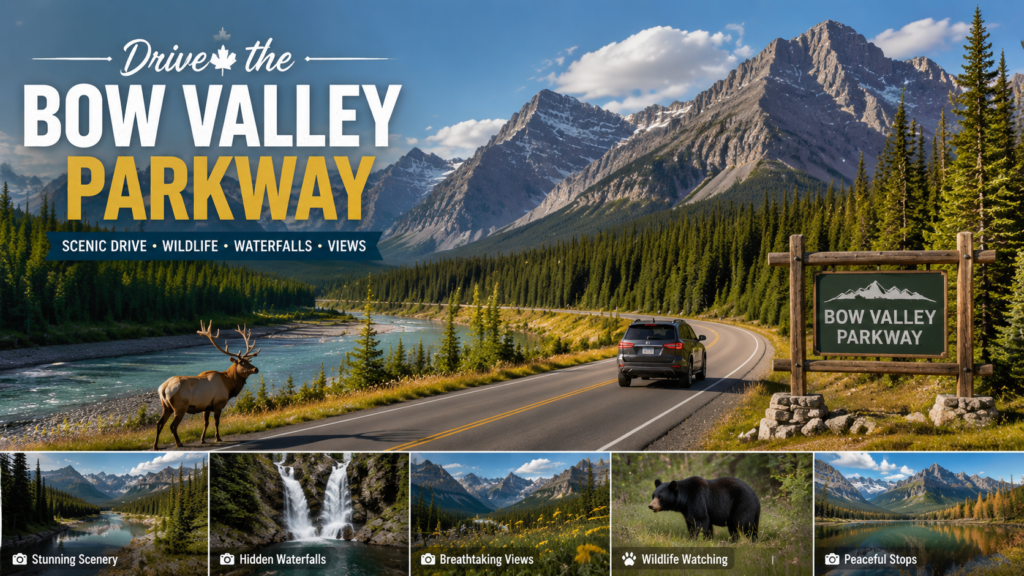
For a more relaxed alternative to the main highway, explore the Bow Valley Parkway when road conditions and access rules allow.
The route connects the Banff and Lake Louise areas and offers opportunities for scenic stops and wildlife viewing. Drive slowly and remain alert because animals can appear unexpectedly.
Always check current road restrictions before traveling, as seasonal closures and wildlife management measures can affect access.
Explore the Icefields Parkway
The Icefields Parkway is one of Canada’s great scenic drives.
The route connects Banff and Jasper national parks and passes through some of the most spectacular landscapes in the Canadian Rockies. Along the way, you will find glaciers, mountain peaks, turquoise lakes, viewpoints, and hiking opportunities.
Do not treat this as a simple point-to-point drive. Allow plenty of time for stops, photographs, and changing weather.
If you have a full day, start early. Pack food, water, warm layers, and emergency supplies because services become less frequent as you travel farther from the main communities.
See Peyto Lake
Peyto Lake is famous for its distinctive shape and intense blue color.
The viewpoint is one of the most popular stops along the Icefields Parkway. The short walk to the viewpoint makes it accessible to many travelers, although conditions can vary throughout the year.
For a more peaceful experience, visit early in the day or later in the afternoon.
Visit the Cave and Basin National Historic Site
Banff is not only about mountains and lakes.
The Cave and Basin National Historic Site offers an opportunity to learn about the history of Canada’s national parks and the natural features that helped shape Banff’s story. Visitors can explore exhibits, films, and seasonal activities while enjoying the surrounding mountain environment.
It is a smart addition to your itinerary when you want a break from hiking.
Go Hiking
Hiking remains one of the best ways to experience Banff.
The park offers trails for different fitness levels, from easy walks to challenging mountain routes. Some trails take you beside rivers and lakes, while others climb toward alpine viewpoints.
Before hiking, check:
- Current trail conditions
- Weather forecasts
- Wildlife warnings
- Seasonal closures
- Distance and elevation gain
- Water availability
- Expected return time
Do not judge a trail only by distance. A short mountain hike with significant elevation gain can be much harder than a longer flat walk.
Enjoy Canoeing and Kayaking
Paddling across a mountain lake is one of the most peaceful Banff experiences.
In warmer months, lakes and waterways can offer beautiful opportunities for canoeing and kayaking. Lake Louise is particularly famous for its colorful canoes and dramatic scenery.
However, water conditions can change quickly. Check current restrictions and local guidance before entering the water, and remember that cold mountain water can remain dangerous even on warm days.
Go Skiing and Snowboarding
Winter turns Banff into a major mountain destination.
The surrounding ski areas attract visitors looking for downhill skiing and snowboarding, while the wider region also offers cross-country skiing and snowshoeing.
The ski season can extend from late fall into spring, depending on snow conditions. Parks Canada also highlights winter walking and cross-country skiing as key seasonal activities within the national park.
Look for Wildlife
Wildlife watching is one of the most exciting things to do in Banff, but it requires patience and responsibility.
Depending on the season and location, travelers may encounter elk, bighorn sheep, deer, mountain goats, and other wildlife. Bears are also part of the Rocky Mountain ecosystem.
Never approach animals for photographs. Keep a safe distance, obey wildlife closures, and never feed wildlife.
If you see a line of cars stopped along a road, do not assume it is safe to stop. Traffic congestion can create dangerous situations for both people and animals.
Try Winter Activities
If you visit Banff during the colder months, do not limit yourself to skiing.
You can also enjoy:
- Snowshoeing
- Winter hiking
- Ice skating
- Cross-country skiing
- Fat biking
- Scenic gondola rides
- Hot springs
- Winter photography
Winter also brings fewer daylight hours and rapidly changing mountain weather, so plan shorter outdoor days and leave room for unexpected conditions.
Best Time to Visit Banff
The best time to visit depends on what you want to experience.
Summer: Best for Lakes and Hiking
June through August is ideal for travelers who want hiking, sightseeing, paddling, and long daylight hours.
However, summer is also the busiest period. Popular attractions can become crowded, parking fills quickly, and accommodation prices may rise.
Fall: Best for Fewer Crowds
September and early October can offer a wonderful balance of scenery and quieter conditions.
The changing colors add another layer to the mountain landscape, although weather becomes less predictable.
Winter: Best for Snow Adventures
December through March is ideal for skiing, snowboarding, snowshoeing, and snowy mountain scenery.
Some roads, trails, and attractions may have seasonal restrictions, so check conditions before traveling.
Spring: Best for a Quieter Visit
Spring can be a transitional season. Snow may remain at higher elevations while lower areas begin to thaw.
Some summer attractions may not yet be operating, but travelers who prefer fewer crowds may enjoy this period.
Banff Weather
Banff’s mountain weather can change quickly.
Summer days can feel warm in the sunshine, while mornings and evenings may remain cool. At higher elevations, temperatures can drop unexpectedly.
Winter brings freezing temperatures and snow, but conditions vary depending on elevation and location.
Pack layers rather than relying on one heavy jacket. A flexible clothing system allows you to adjust throughout the day.
Before leaving your accommodation, check the forecast and current park advisories. Parks Canada specifically recommends checking trail conditions because conditions can change rapidly.
How to Reach Banff
Most international travelers reach Banff through Calgary.
Calgary International Airport is the closest major airport, and Banff is connected to the city by road and shuttle services.
You can also reach Banff by:
- Rental car
- Airport shuttle
- Private transfer
- Bus services
- Organized tours
Driving gives you the greatest flexibility for exploring the wider region, especially if you plan to visit places along the Icefields Parkway.
However, you do not necessarily need a car for the entire trip. Banff and Lake Louise have public transportation options, and many major attractions can be reached through organized transportation.
How to Get Around Banff
Getting around Banff requires more planning during peak season.
For downtown attractions, walking is often the easiest option. Local public transportation can help connect major areas, while shuttle services are particularly important for Lake Louise and Moraine Lake.
For 2026, Parks Canada strongly recommends planning ahead for Lake Louise and Moraine Lake. Shuttle reservations are required, and parking availability at Lake Louise can be extremely limited during busy periods.
The best strategy is to combine walking, public transit, and reserved shuttles instead of assuming you can drive everywhere.
Where to Stay in Banff
Your choice of accommodation can significantly affect your trip.
Downtown Banff
Best for first-time visitors who want restaurants, shops, and easy access to town services.
Near Banff Avenue
A convenient option for travelers who want to walk to restaurants and attractions.
Lake Louise
A good choice if your itinerary focuses heavily on Lake Louise and nearby mountain scenery.
Canmore
Canmore sits outside Banff National Park and can offer another accommodation base for travelers exploring the wider region.
When choosing a hotel, compare the total cost rather than the nightly rate alone. Parking, transportation, resort fees, and breakfast can change the final price.
Food and Restaurants
Banff has a surprisingly diverse food scene for a mountain town.
You can find everything from casual burgers and pizza to Canadian comfort food, international cuisine, coffee shops, bakeries, and upscale dining.
Try local specialties where available, but also leave room for simple meals. After a long day outdoors, a warm bowl of soup or a hearty breakfast can be just as satisfying as an elaborate dinner.
If you plan to eat at a popular restaurant during peak season, reservations are often a smart idea.
Banff Nightlife
Banff nightlife is generally relaxed rather than club-focused.
You will find:
- Cozy pubs
- Cocktail bars
- Live music
- Restaurants with evening dining
- Casual lounges
The atmosphere suits travelers who prefer spending the day outdoors and enjoying a drink or meal afterward.
During winter, the town can feel especially lively after a day on the slopes.
Shopping in Banff
Banff Avenue is the main shopping area.
Look for:
- Outdoor clothing
- Hiking equipment
- Local artwork
- Canadian souvenirs
- Indigenous-inspired art from reputable sources
- Handmade gifts
- Mountain-themed home décor
Avoid buying anything that appears to be made from protected wildlife products or restricted natural materials unless you are certain it is legal to purchase and transport.
How Much Does a Banff Trip Cost?
Banff can be expensive, especially during summer.
Your budget will depend on accommodation, transportation, activities, dining, and trip length.
A rough planning structure is:
| Travel Style | Approximate Daily Budget |
| Budget traveler | $100–$180 |
| Mid-range traveler | $200–$400 |
| Comfortable/upscale traveler | $450+ |
These are planning estimates rather than fixed prices and can change significantly by season.
Parks Canada fees are separate from accommodation and activity costs. For 2026, the standard daily adult admission listed by Parks Canada is $12.25, while a Discovery Pass is listed at $83.50 for an adult. Youth aged 17 and under have free admission to Parks Canada places, although other costs may still apply.
One important 2026 detail is the Canada Strong Pass, which provides free admission and 25% off camping and overnight stays with Parks Canada from June 19 through September 7, 2026. Always check current official information before booking because eligibility and included services can vary.
Family Travel in Banff
Banff is an excellent family destination.
Young children can enjoy easy walks, scenic viewpoints, wildlife spotting, gondola rides, and lakeside adventures. Older children may prefer hiking, canoeing, skiing, or snowshoeing.
The key is not to pack every day with activities. Mountain travel can be tiring, especially for children.
Plan one major activity each day and leave space for spontaneous stops.
Solo Travel in Banff
Banff works well for solo travelers who enjoy nature and outdoor activities.
You can explore downtown independently, join guided hikes, take public transportation, or participate in organized excursions.
For solo hiking, choose trails that match your experience and let someone know your plans. Carry essentials and check current conditions before leaving.
If you are unfamiliar with mountain environments, consider joining a guided activity for more challenging adventures.
Banff for Couples
Banff is naturally romantic.
Couples can enjoy:
- Sunrise at a mountain lake
- Scenic drives
- Gondola views
- Hot springs
- Fine dining
- Winter activities
- Lakeside walks
- Cozy evenings downtown
For a special experience, combine an outdoor adventure with a relaxed evening rather than trying to stay active all day.
Hidden Gems in Banff
The most famous attractions deserve their reputation, but Banff also rewards travelers who slow down.
Consider exploring:
- Less crowded walking trails
- Quiet picnic areas
- Small viewpoints along scenic roads
- Historic sites
- Early-morning lake viewpoints
- Local cafés
- Lesser-known riverside walks
The trick is timing. A famous place at sunrise can feel completely different from the same place at midday.
Best Photography Spots
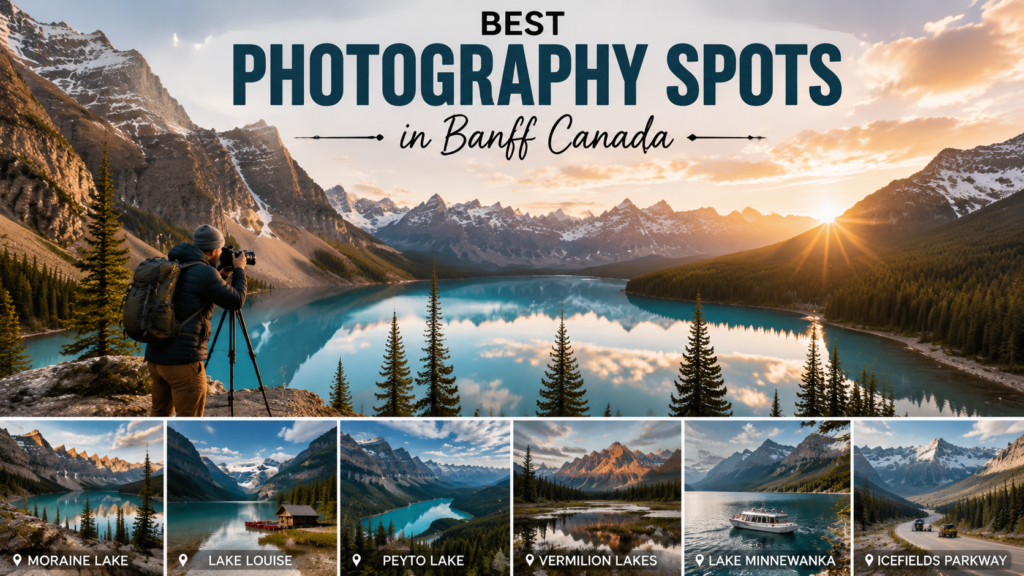
Banff is a dream destination for photographers.
Some excellent locations include:
- Lake Louise
- Moraine Lake
- Peyto Lake
- Bow Falls
- Lake Minnewanka
- Vermilion Lakes
- Sulphur Mountain
- The Icefields Parkway
- Johnston Canyon
For better photographs, avoid chasing only the most famous viewpoints. Look for reflections, changing weather, foreground trees, and natural framing.
Most importantly, respect closures and stay on designated trails. A photograph is never worth risking your safety or damaging the environment.
Best Day Trips from Banff
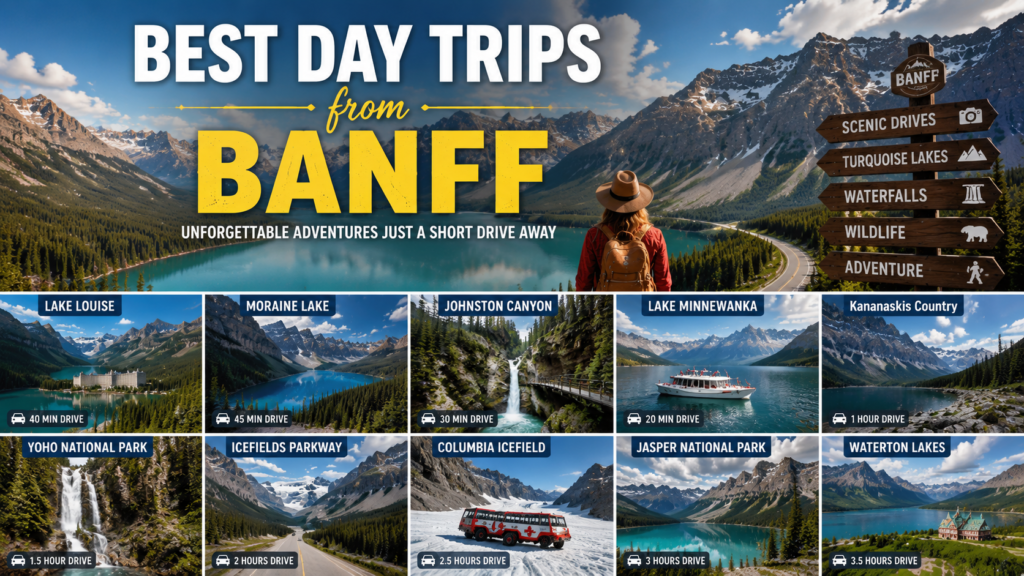
Banff’s location makes it an excellent base for exploring the wider Canadian Rockies.
Lake Louise and Moraine Lake
These are the obvious choices for a full-day outing, especially if you combine both lakes using the available shuttle connection.
Icefields Parkway
Plan a full day if you want to explore viewpoints and attractions along the route.
Yoho National Park
Cross into British Columbia to explore another spectacular mountain environment.
Canmore
A great option for a relaxed day exploring cafés, shops, mountain views, and outdoor areas.
Kananaskis Country
Depending on your route and current conditions, Kananaskis offers another impressive landscape for hiking and sightseeing.
Always check current road conditions, park restrictions, and seasonal closures before starting a day trip.
A Perfect 3-Day Banff Itinerary
Day 1: Banff Town and Mountain Views
Start with breakfast downtown.
Spend the morning exploring Banff Avenue and nearby attractions. Visit Bow Falls and the Cave and Basin area, then ride the Banff Gondola if conditions are clear.
Finish the day with a relaxing soak at Banff Upper Hot Springs.
Day 2: Lake Louise and Moraine Lake
Reserve your transportation in advance.
Spend the morning at Lake Louise, then use the appropriate shuttle connection to visit Moraine Lake when operating.
Return to Banff in the evening and enjoy dinner downtown.
Day 3: Scenic Drive and Outdoor Adventure
Choose between a hiking day, Lake Minnewanka, or a scenic drive.
If you have a full day and want a longer adventure, explore part of the Icefields Parkway.
For a more relaxed trip, combine Lake Minnewanka with an easy trail and a leisurely evening in Banff.
Local Tips for Visiting Banff
A few practical habits can make your trip much smoother.
Start early. Popular places are much easier to enjoy before the crowds arrive.
Book important transportation early. This is especially important for Lake Louise and Moraine Lake during the busy season.
Check conditions every morning. Mountain weather and trail conditions can change quickly.
Carry layers. Even summer evenings can feel cool.
Respect wildlife. Never approach, feed, or provoke animals.
Stay flexible. If weather ruins your lake-viewing plans, switch to museums, cafés, hot springs, or another activity.
Use public transportation when practical. It can reduce parking stress in busy areas.
Travel Mistakes to Avoid
Trying to See Everything in One Day
Banff is larger than it looks. Give yourself enough time to actually enjoy each place.
Driving to Moraine Lake Without Checking Access Rules
Personal vehicles cannot use Moraine Lake Road. Plan approved transportation instead.
Ignoring Shuttle Reservations
During busy periods, shuttle availability can become limited. Reserve ahead whenever possible.
Underestimating Mountain Weather
A sunny morning does not guarantee perfect conditions all day.
Getting Too Close to Wildlife
Keep your distance and follow park guidance.
Forgetting Park Fees
Budget for national park admission and separate activity or transportation costs.
Packing Only for the Season
Even summer trips require layers and rain protection.
Leaving Without Checking Closures
Parks Canada maintains current bulletins for closures, restrictions, and safety advisories. Check them before heading out.
What to Pack for Banff
Your packing list should change with the season, but these essentials are useful for most trips:
- Comfortable walking shoes
- Hiking boots
- Lightweight layers
- Warm fleece or sweater
- Waterproof jacket
- Sun protection
- Sunglasses
- Reusable water bottle
- Small daypack
- Portable phone charger
- Basic first-aid supplies
- Insect repellent
- Camera
- Offline maps
- Warm hat and gloves for cooler seasons
For serious hikes, add appropriate safety equipment based on the route and current conditions.
Safety Tips for Banff
Banff is a safe destination for most visitors, but the wilderness requires respect.
Stay on marked trails where possible, tell someone about longer hiking plans, and carry enough water.
Wildlife safety is especially important. Keep your distance and never feed animals.
If you encounter a bear, follow current Parks Canada guidance and remain calm. Carry bear spray where recommended and know how to use it before entering backcountry areas.
Also remember that cell service may be limited in remote locations. Moraine Lake, for example, is described by Parks Canada as a backcountry location without cell service, Wi-Fi, running water, lighting, or regular services.
Frequently Asked Questions
What are the best things to do in Banff Canada?
The best things to do include visiting Lake Louise and Moraine Lake, riding the Banff Gondola, exploring Banff Avenue, hiking Johnston Canyon, visiting Lake Minnewanka, relaxing at Banff Upper Hot Springs, and driving the Icefields Parkway.
How many days do you need in Banff?
Three to five days is a good starting point for first-time visitors. Three days covers the major highlights, while five or more days allows time for hiking, scenic drives, and slower exploration.
Is Banff expensive to visit?
Banff can be expensive, especially during peak summer months. Accommodation and transportation usually make up a significant portion of the budget. Booking early and traveling outside peak periods can help reduce costs.
What is the best month to visit Banff?
July and August are popular for hiking and sightseeing, while September can offer cooler weather and fewer crowds. Winter is ideal for skiing and snow activities.
Can you visit Lake Louise and Moraine Lake in one day?
Yes. During the 2026 operating season, Parks Canada provides a Lake Connector shuttle between the two lakes for eligible shuttle users. Reservations and transportation planning are essential.
Can you drive to Moraine Lake?
Personal vehicles cannot access Moraine Lake Road. Visitors need to use approved transportation options, including Parks Canada shuttles or licensed commercial operators.
Is Banff good for families?
Yes. Families can enjoy easy walks, scenic viewpoints, gondola rides, wildlife viewing, sightseeing, and seasonal activities. The best approach is to create a flexible itinerary with plenty of breaks.
Is Banff good for a winter vacation?
Absolutely. Winter offers skiing, snowboarding, snowshoeing, cross-country skiing, ice skating, winter walks, and hot springs. Always check seasonal conditions before traveling.
Do you need a car in Banff?
Not necessarily. You can explore downtown Banff on foot and use public transportation or shuttles for several popular areas. However, a car can be useful for exploring the wider Rocky Mountain region.
Is Banff worth visiting in 2026?
Yes. Banff remains one of Canada’s most spectacular destinations, with year-round outdoor activities, iconic mountain scenery, and a wide range of experiences. In 2026, travelers should pay particular attention to transportation reservations, current park advisories, and seasonal access rules.
Conclusion
The best Things to Do in Banff Canada go far beyond checking famous attractions off a list. The real magic comes from experiencing the destination at your own pace—watching sunlight move across a turquoise lake, hiking through quiet forests, driving beneath enormous mountain peaks, or simply sitting in Banff town with the Rockies rising around you.
For a first visit, prioritize Lake Louise, Moraine Lake, the Banff Gondola, Banff Upper Hot Springs, Johnston Canyon, Lake Minnewanka, and at least one scenic drive. Then leave room for unexpected moments. Banff rewards travelers who plan carefully but remain flexible.
The most important advice for 2026 is simple: plan ahead, check official park conditions, reserve transportation for popular attractions, respect wildlife, and give yourself enough time to enjoy the mountains rather than rushing from one viewpoint to the next. With the right preparation, Banff can become more than a beautiful stop in Canada—it can be the highlight of your entire Rocky Mountain adventure.
Things to Do in Quebec City: 35 Unforgettable Experiences for a Truly French-Canadian Escape