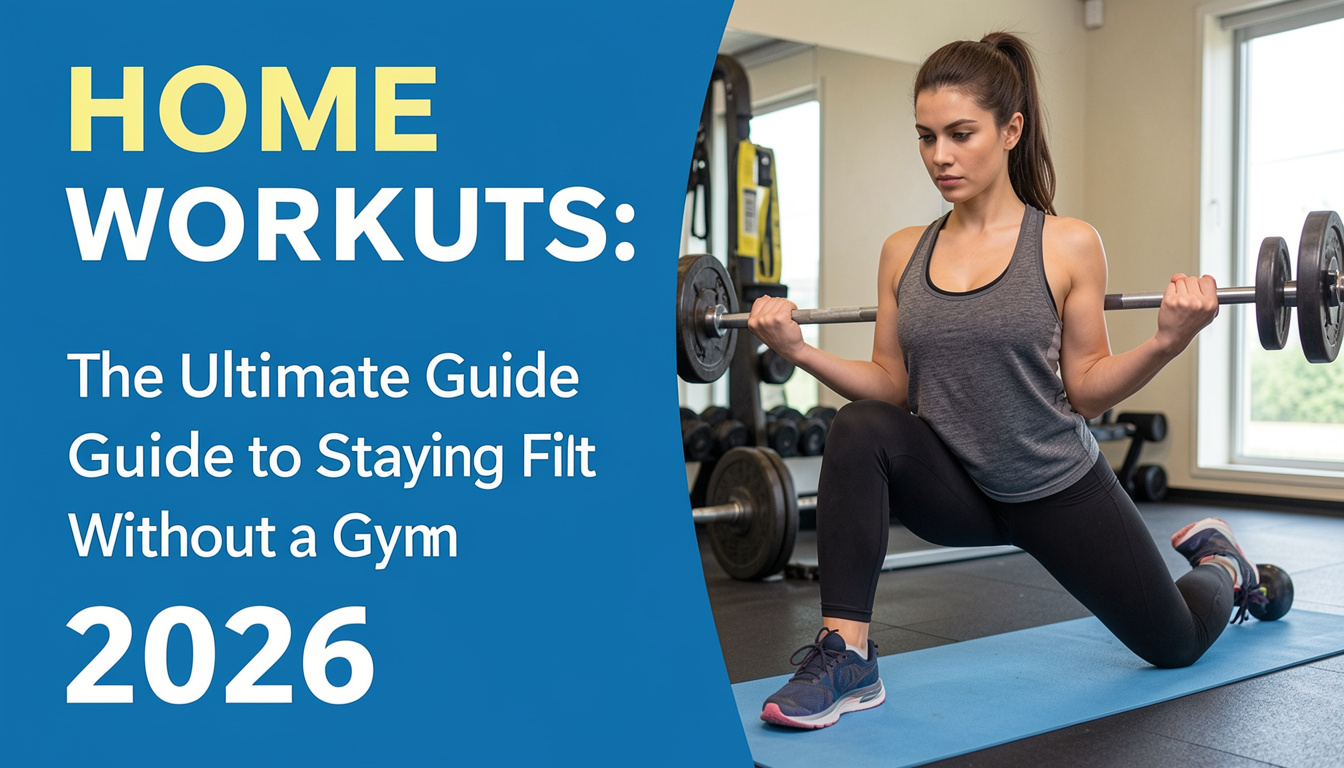
In today’s fast-paced world, maintaining physical fitness has become more important than ever. However, busy schedules, expensive gym memberships, and limited free time often make it difficult for people to stay active. This is where Home Workouts have become a game-changer. Exercising at home allows individuals to improve their health, build strength, lose weight, and enhance overall well-being without leaving their homes. Whether you are a beginner or an experienced fitness enthusiast, home workouts provide flexibility, affordability, and convenience that traditional gyms cannot always offer.
The popularity of Home Workouts has increased dramatically over the last few years, thanks to online fitness programs, virtual trainers, and easy access to workout videos. Today, millions of people prefer working out at home because it saves time, reduces costs, and allows them to exercise according to their own schedules. With little or no equipment, anyone can achieve excellent fitness results by following the right workout routine consistently. This comprehensive guide will explain everything you need to know about home workouts, including their benefits, exercises, workout plans, equipment, nutrition tips, and expert advice.
What Are Home Workouts?
Home Workouts refer to structured physical exercise routines performed at home instead of in a gym or fitness center. These workouts may involve bodyweight exercises, resistance bands, dumbbells, kettlebells, yoga mats, or even household items as workout tools.
One of the greatest advantages of home workouts is that they require minimal space and can be customized according to individual fitness goals. Whether your objective is weight loss, muscle building, improving endurance, increasing flexibility, or maintaining overall health, there is a home workout plan suitable for you.
Home workouts can range from simple stretching exercises to high-intensity interval training (HIIT), strength training, yoga, Pilates, and cardiovascular exercises. The variety available ensures that people of all ages and fitness levels can find routines that match their needs.
Why Home Workouts Are Becoming So Popular
The fitness industry has evolved significantly over the past decade. More people now realize that achieving excellent fitness does not necessarily require expensive gym memberships.
Several factors contribute to the growing popularity of Home Workouts, including:
Convenience
Working out at home eliminates commuting time. You can exercise whenever it fits your schedule, whether early in the morning, during lunch breaks, or late at night.
Cost Savings
Gym memberships, transportation costs, and expensive fitness classes can quickly become costly. Home workouts allow you to stay fit while spending very little money.
Privacy
Many beginners feel uncomfortable exercising in front of others. Home workouts provide a comfortable environment where individuals can focus entirely on improving themselves without judgment.
Flexible Schedule
Unlike gyms with operating hours, your home is available 24/7. This flexibility makes it easier to maintain consistency.
Family-Friendly
Parents can exercise while staying close to their children. Family members can even participate together, making fitness enjoyable for everyone.
Benefits of Home Workouts
There are countless advantages to choosing Home Workouts over traditional gym sessions.
Improves Cardiovascular Health
Regular exercise strengthens the heart, improves blood circulation, lowers blood pressure, and reduces the risk of heart disease.
Supports Weight Loss
Home workouts burn calories, increase metabolism, and help reduce body fat when combined with a healthy diet.
Builds Muscle Strength
Strength-based home exercises improve muscular endurance and overall body strength even without expensive gym equipment.
Increases Flexibility
Stretching routines and yoga improve mobility, reduce stiffness, and help prevent injuries.
Boosts Mental Health
Exercise releases endorphins, which reduce stress, anxiety, and symptoms of depression while improving mood.
Enhances Energy Levels
People who exercise consistently often experience greater energy throughout the day due to improved circulation and oxygen flow.
Strengthens Bones
Weight-bearing exercises increase bone density and reduce the risk of osteoporosis.
Improves Sleep Quality
Regular physical activity helps regulate sleep cycles, allowing for deeper and more restful sleep.
Supports Better Posture
Many home exercises strengthen the core and back muscles, reducing poor posture caused by prolonged sitting.
Increases Self-Confidence
Achieving fitness goals enhances self-esteem and motivates individuals to maintain healthy habits.
Who Should Do Home Workouts?
One of the biggest advantages of Home Workouts is that they are suitable for nearly everyone.
They are especially beneficial for:
- Beginners starting their fitness journey
- Busy professionals
- Students
- Stay-at-home parents
- Senior citizens
- People recovering from inactivity
- Individuals looking to lose weight
- Athletes seeking supplemental training
- People with limited budgets
- Anyone who prefers exercising in privacy
Home workouts can easily be modified according to fitness level, age, and physical limitations, making them an accessible option for most individuals.
Essential Tips Before Starting Home Workouts
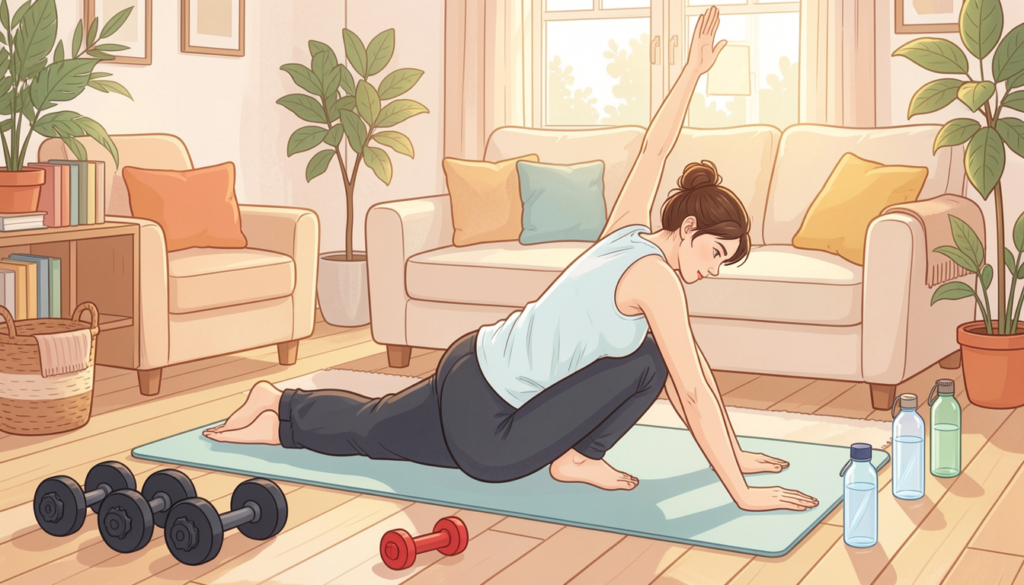
Before beginning any workout routine, it’s important to prepare properly to maximize results and reduce the risk of injury.
Set Clear Fitness Goals
Determine whether your goal is:
- Weight loss
- Muscle gain
- Improved endurance
- Better flexibility
- General fitness
- Stress relief
Clear goals make it easier to choose the right exercises and stay motivated.
Create a Dedicated Workout Space
Choose a clean, clutter-free area with enough room to move comfortably. A dedicated workout space helps improve focus and consistency.
Wear Comfortable Clothing
Proper workout attire allows unrestricted movement and helps keep you comfortable throughout your exercise session.
Stay Hydrated
Drink water before, during, and after exercising to maintain hydration and support physical performance.
Warm Up Properly
Best Home Workout Equipment
One of the greatest misconceptions about Home Workouts is that expensive equipment is necessary. In reality, many highly effective workouts require little or no equipment. However, adding a few affordable fitness tools can increase workout variety, improve resistance, and accelerate results.
Below are some of the best equipment options for home fitness enthusiasts.
Yoga Mat
A yoga mat provides comfort, stability, and grip during floor exercises. It is useful for stretching, yoga, Pilates, push-ups, planks, and abdominal workouts.
Benefits include:
- Better joint protection
- Reduced slipping
- Improved comfort
- Easy portability
Resistance Bands
Resistance bands are inexpensive yet extremely versatile.
They can be used for:
- Strength training
- Muscle activation
- Rehabilitation
- Flexibility training
- Full-body workouts
Resistance bands come in different resistance levels, making them suitable for beginners and advanced users alike.
Dumbbells
Adjustable or fixed-weight dumbbells are excellent for building muscle at home.
Common exercises include:
- Bicep curls
- Shoulder press
- Goblet squats
- Lunges
- Chest press
- Rows
Kettlebells
Kettlebells combine strength and cardio training.
Popular exercises include:
- Kettlebell swings
- Turkish get-ups
- Deadlifts
- Squats
- Snatches
These movements improve coordination, endurance, and power.
Jump Rope
Jump ropes are among the best tools for cardiovascular fitness.
Benefits include:
- Burns calories quickly
- Improves coordination
- Strengthens legs
- Enhances endurance
Just 15–20 minutes of jumping rope can provide an excellent cardio workout.
Stability Ball
A stability ball improves:
- Core strength
- Balance
- Posture
- Flexibility
It is commonly used for abdominal workouts and rehabilitation exercises.
Adjustable Bench
Although optional, an adjustable bench expands the variety of strength-training exercises possible at home.
Bodyweight Exercises for Home Workouts
Bodyweight training forms the foundation of many successful Home Workouts. These exercises rely entirely on your body weight, making them accessible anywhere.
Push-Ups
Push-ups strengthen:
- Chest
- Shoulders
- Triceps
- Core
Beginners can start with knee push-ups before progressing to standard push-ups.
Recommended:
3 sets of 10–15 repetitions.
Squats
Squats are among the most effective lower-body exercises.
They target:
- Quadriceps
- Glutes
- Hamstrings
- Core
Recommended:
3 sets of 15 repetitions.
Lunges
Lunges improve:
- Balance
- Stability
- Leg strength
Alternate both legs evenly.
Recommended:
3 sets of 12 repetitions per leg.
Plank
The plank is an excellent core-strengthening exercise.
It engages:
- Abdominal muscles
- Lower back
- Shoulders
- Glutes
Beginners:
20–30 seconds
Advanced:
60–120 seconds
Mountain Climbers
Mountain climbers combine strength and cardio.
Benefits:
- Burns calories
- Improves endurance
- Strengthens the core
- Raises heart rate
Recommended:
30–60 seconds.
Burpees
Burpees provide a full-body workout.
They improve:
- Cardiovascular endurance
- Strength
- Agility
- Fat burning
Recommended:
10–15 repetitions.
Glute Bridges
Excellent for strengthening:
- Glutes
- Hamstrings
- Lower back
Recommended:
15 repetitions for 3 sets.
Bicycle Crunches
One of the most effective abdominal exercises.
Targets:
- Upper abs
- Lower abs
- Obliques
Recommended:
20 repetitions.
Strength Training at Home
Strength training is essential for building muscle, increasing metabolism, and improving bone density. Even without heavy gym machines, Home Workouts can effectively develop strength.
Upper Body Strength Routine
Exercises include:
- Push-ups
- Pike push-ups
- Chair dips
- Resistance band rows
- Dumbbell shoulder press
Repeat:
3–4 sets.
Lower Body Strength Routine
Exercises:
- Squats
- Bulgarian split squats
- Lunges
- Romanian deadlifts
- Glute bridges
- Calf raises
Perform:
10–15 repetitions each.
Core Strength Routine
Exercises:
- Plank
- Side plank
- Leg raises
- Russian twists
- Hollow hold
Repeat:
3 rounds.
Cardio Home Workouts
Cardio improves heart health while burning calories efficiently.
Jumping Jacks
A classic warm-up exercise that increases heart rate quickly.
Duration:
60 seconds.
High Knees
Benefits:
- Burns fat
- Improves endurance
- Strengthens legs
Duration:
45 seconds.
Butt Kicks
Excellent for warming up the lower body.
Duration:
45 seconds.
Jump Squats
Combines explosive power with cardiovascular conditioning.
Recommended:
15 repetitions.
Skater Jumps
Improves:
- Balance
- Agility
- Leg strength
Perform:
20 repetitions.
Shadow Boxing
Great cardio option requiring no equipment.
Work for:
3-minute rounds.
HIIT Home Workouts
High-Intensity Interval Training (HIIT) alternates short bursts of intense activity with brief recovery periods.
Benefits include:
- Maximum calorie burn
- Faster metabolism
- Improved endurance
- Short workout duration
- Fat loss
- Muscle preservation
Beginner HIIT Routine
30 seconds work
30 seconds rest
Exercises:
- Jumping jacks
- Squats
- Push-ups
- Mountain climbers
- High knees
Repeat 4 rounds.
Intermediate HIIT Routine
40 seconds work
20 seconds rest
Exercises:
- Burpees
- Jump squats
- Push-ups
- Plank
- Lunges
- High knees
Repeat 5 rounds.
Advanced HIIT Routine
45 seconds work
15 seconds rest
Exercises:
- Burpees
- Box jumps
- Mountain climbers
- Jump lunges
- Push-ups
- Sprint in place
Repeat 6 rounds.
Yoga and Flexibility Training
Adding yoga to Home Workouts improves recovery, flexibility, posture, and mental relaxation.
Child’s Pose
Benefits:
- Relaxes muscles
- Reduces stress
- Improves flexibility
Hold:
30 seconds.
Downward Dog
Improves:
- Shoulder mobility
- Hamstring flexibility
- Core strength
Hold:
45 seconds.
Cobra Stretch
Excellent for:
- Lower back
- Spine mobility
- Chest opening
Cat-Cow Stretch
Improves spinal flexibility while reducing stiffness.
Repeat:
10–15 cycles.
Seated Forward Fold
Targets:
- Hamstrings
- Lower back
- Calves
Hold:
30–60 seconds.
Butterfly Stretch
Improves hip flexibility.
Hold:
45 seconds.
Home Workouts for Beginners
If you’re new to fitness, starting slowly is the best approach. Consistency is more important than intensity.
Beginner Weekly Workout Plan
Monday – Full Body
- Squats – 15 reps
- Push-ups – 10 reps
- Plank – 20 seconds
- Lunges – 10 per leg
- Glute bridges – 15 reps
Tuesday – Walking + Stretching
30 minutes walking
15 minutes stretching
Wednesday – Cardio
- Jumping jacks
- High knees
- Butt kicks
- Mountain climbers
20 minutes.
Thursday – Rest Day
Light walking
Mobility exercises
Friday – Strength
- Chair dips
- Squats
- Plank
- Push-ups
- Bicycle crunches
Saturday – Yoga
30–40 minutes
Focus on flexibility and breathing.
Sunday – Active Recovery
Easy walk
Foam rolling
Gentle stretching
Weekly Workout Schedule
| Day | Focus |
| Monday | Full Body Strength |
| Tuesday | Cardio |
| Wednesday | Core Training |
| Thursday | Yoga |
| Friday | HIIT |
| Saturday | Strength Training |
| Sunday | Recovery |
Home Workouts for Weight Loss
One of the biggest reasons people choose Home Workouts is to lose weight. The good news is that you don’t need expensive gym memberships or fancy machines to burn fat effectively. When combined with a balanced diet and consistent exercise routine, home workouts can help you achieve sustainable weight loss.
Weight loss occurs when you burn more calories than you consume. Therefore, combining cardiovascular exercises, strength training, and proper nutrition creates the ideal environment for fat loss.
Best Home Exercises for Weight Loss
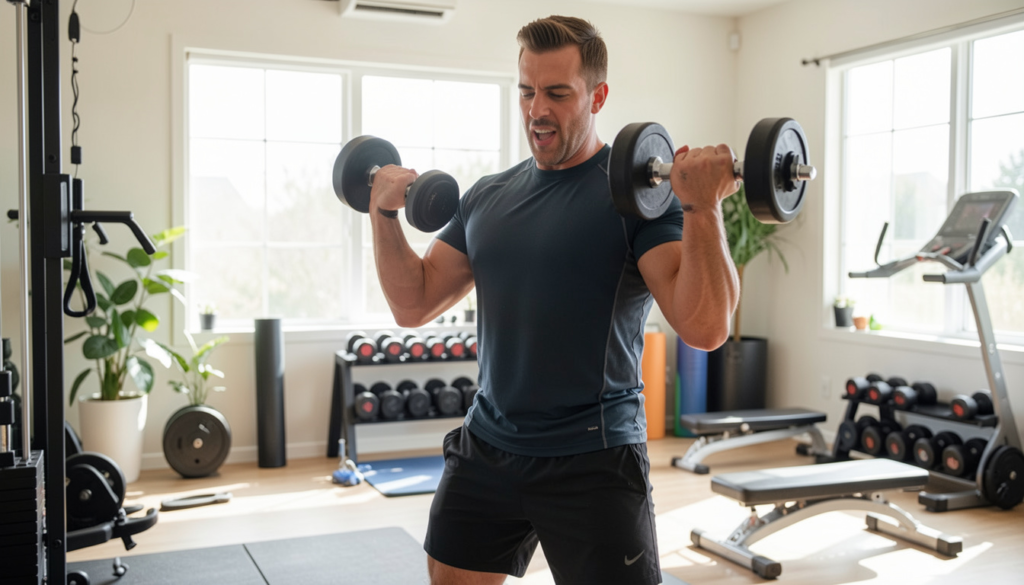
The following exercises burn a significant number of calories while strengthening your entire body:
Burpees
Burpees are among the highest calorie-burning exercises.
Benefits:
- Burns fat quickly
- Improves endurance
- Strengthens the entire body
- Increases heart rate
Recommended: 3 sets of 12–15 reps.
Jump Squats
Jump squats combine lower-body strength with explosive cardio.
Benefits:
- Tones legs
- Builds power
- Burns calories
- Improves athletic performance
Recommended: 15 repetitions for 3 sets.
Mountain Climbers
Mountain climbers elevate your heart rate while engaging the core.
Benefits:
- Burns belly fat
- Improves endurance
- Strengthens shoulders
- Enhances agility
Recommended: 45–60 seconds.
High Knees
High knees are an excellent cardio exercise that can be performed in small spaces.
Benefits:
- Burns calories rapidly
- Improves coordination
- Strengthens legs
- Boosts stamina
Jump Rope
Just 20 minutes of jumping rope can burn hundreds of calories depending on your weight and intensity.
Sample Weight Loss Workout
Perform each exercise for 40 seconds, followed by 20 seconds of rest:
- Jumping Jacks
- Squats
- Push-Ups
- High Knees
- Burpees
- Mountain Climbers
Repeat 4–5 rounds.
Home Workouts for Muscle Gain
Many people believe muscle can only be built in a gym. While gyms offer heavier weights, Home Workouts can still produce impressive muscle growth using progressive overload, bodyweight exercises, resistance bands, and dumbbells.
Principles of Muscle Building
To build muscle successfully, follow these principles:
- Increase resistance gradually.
- Eat enough protein.
- Sleep 7–9 hours daily.
- Train consistently.
- Allow muscles time to recover.
Best Muscle-Building Exercises
Push-Ups
Targets:
- Chest
- Shoulders
- Triceps
Advanced Variations:
- Diamond Push-Ups
- Decline Push-Ups
- Archer Push-Ups
Bulgarian Split Squats
Excellent for developing powerful legs.
Targets:
- Glutes
- Quadriceps
- Hamstrings
Resistance Band Rows
Strengthens:
- Upper back
- Biceps
- Rear shoulders
Pike Push-Ups
Focus on:
- Shoulders
- Upper chest
- Triceps
Single-Leg Glute Bridges
Improves:
- Hip strength
- Glute development
- Core stability
Progressive Overload at Home
Progressive overload means gradually increasing the difficulty of your workouts.
Ways to achieve this include:
- Add more repetitions.
- Increase the number of sets.
- Slow down each repetition.
- Reduce rest periods.
- Use heavier resistance bands or dumbbells.
- Try more advanced exercise variations.
Even without a gym, these strategies can stimulate continuous muscle growth.
Nutrition Tips for Home Workouts
Exercise alone cannot deliver optimal results without proper nutrition. Whether your goal is weight loss, muscle gain, or improved endurance, healthy eating plays a vital role.
Eat Enough Protein
Protein supports muscle repair and growth.
Good sources include:
- Chicken breast
- Fish
- Eggs
- Greek yogurt
- Cottage cheese
- Lentils
- Chickpeas
- Beans
- Tofu
Aim for 1.2–2.0 grams of protein per kilogram of body weight, depending on your activity level and goals.
Choose Complex Carbohydrates
Complex carbohydrates provide sustained energy.
Examples:
- Oatmeal
- Brown rice
- Sweet potatoes
- Whole wheat bread
- Quinoa
Include Healthy Fats
Healthy fats support hormone production and overall health.
Sources:
- Avocados
- Nuts
- Seeds
- Olive oil
- Fatty fish
Stay Hydrated
Drink water consistently throughout the day.
Hydration helps:
- Improve performance
- Prevent fatigue
- Regulate body temperature
- Aid recovery
Pre-Workout Nutrition
Eating before exercise provides energy for better performance.
30–90 minutes before your workout, consider:
- Banana with peanut butter
- Oatmeal
- Whole-grain toast
- Greek yogurt with fruit
- Smoothie
Avoid heavy, greasy meals immediately before exercising.
Post-Workout Nutrition
After completing your Home Workouts, your body needs nutrients to recover.
A balanced post-workout meal should include:
- Lean protein
- Complex carbohydrates
- Vegetables
- Water
Examples:
- Grilled chicken with brown rice
- Eggs and whole-grain toast
- Protein smoothie with fruit
- Cottage cheese with berries
Common Mistakes to Avoid During Home Workouts
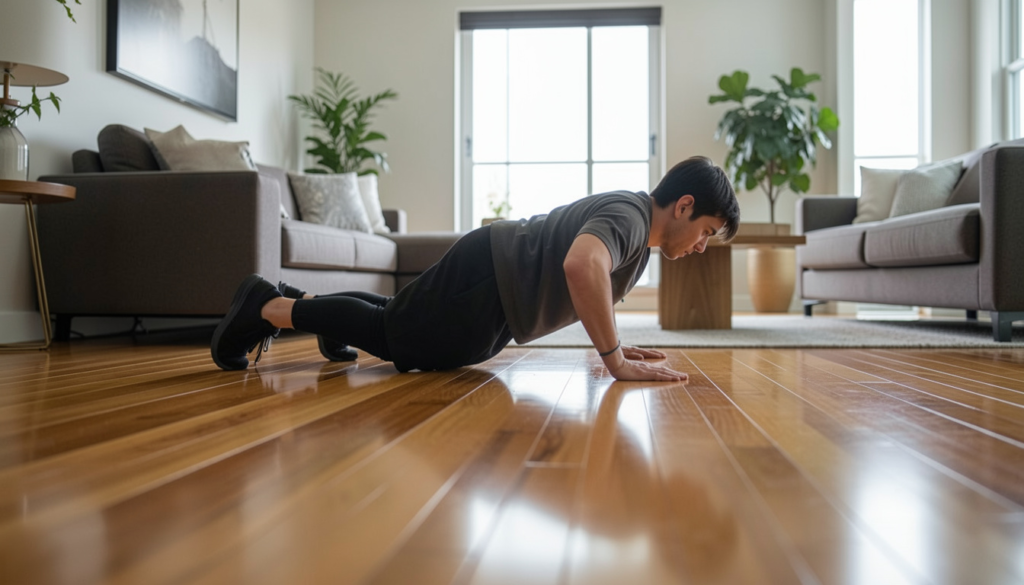
Avoiding common mistakes can improve your results and reduce the risk of injury.
Skipping Warm-Ups
Always spend 5–10 minutes warming up before exercising.
Poor Exercise Form
Incorrect technique may cause injuries and reduce workout effectiveness.
Focus on controlled movements and proper posture.
Overtraining
More exercise isn’t always better. Your muscles need recovery time to grow and repair.
Schedule at least 1–2 rest days each week.
Inconsistent Routine
Consistency is the key to long-term fitness success.
Create a realistic schedule and stick to it.
Ignoring Nutrition
Even the best workout program cannot compensate for unhealthy eating habits.
Not Progressing
If you perform the same workout repeatedly without increasing the challenge, your progress may stall.
Staying Motivated with Home Workouts
Motivation often fluctuates, but building habits helps you stay consistent.
Set Realistic Goals
Examples:
- Exercise 4 days per week.
- Lose 5 kg in three months.
- Complete 20 push-ups without stopping.
- Improve flexibility.
Track Your Progress
Keep a fitness journal or use a mobile app to record:
- Workout duration
- Repetitions
- Sets
- Body measurements
- Weight changes
Create a Workout Schedule
Treat your workout like an important appointment.
Consistency builds lasting habits.
Listen to Music
Energetic music can:
- Improve mood
- Increase focus
- Boost workout intensity
Reward Yourself
Celebrate milestones with healthy rewards, such as:
- New workout clothes
- Fitness equipment
- A relaxing rest day
- A healthy favorite meal
Safety Tips for Home Workouts
Safety should always come first.
- Warm up before every session.
- Cool down afterward.
- Stay hydrated.
- Wear supportive footwear when needed.
- Keep your workout space free of hazards.
- Stop immediately if you feel severe pain, dizziness, or chest discomfort.
- If you have a medical condition, consult a healthcare professional before starting a new fitness program.
Advanced Home Workout Strategies
Once you’ve mastered the basics, you can make your Home Workouts more challenging with advanced techniques.
Circuit Training
Complete several exercises back-to-back with minimal rest to improve both strength and cardiovascular fitness.
Supersets
Perform two exercises targeting different muscle groups consecutively without resting.
Example:
- Push-Ups
- Squats
Repeat for multiple rounds.
Tempo Training
Slow down each repetition to increase time under tension and stimulate muscle growth.
Example:
- Lower into a squat for 3–4 seconds.
- Pause briefly.
- Stand up with control.
EMOM (Every Minute on the Minute)
At the start of each minute, complete a set number of repetitions. Rest for the remaining time before the next minute begins.
This method improves endurance and work capacity.
Tabata Training
A popular HIIT format:
- 20 seconds of intense work
- 10 seconds of rest
Repeat for 8 rounds (4 minutes total).
Expert Tips for Long-Term Success with Home Workouts
Achieving your fitness goals is not just about exercising for a few weeks—it’s about building healthy habits that last a lifetime. Whether your goal is weight loss, muscle gain, improved endurance, or overall wellness, consistency is the key to success with Home Workouts. The following expert tips will help you stay motivated and continue making progress.
Make Exercise a Daily Habit
Treat your workout like any other important appointment. Set aside a specific time each day and stick to it. Over time, exercising will become a natural part of your routine.
Focus on Consistency Instead of Perfection
You don’t need to complete a perfect workout every day. Even a 20–30 minute session is better than skipping exercise altogether. Small, consistent efforts produce significant long-term results.
Challenge Yourself Regularly
As your fitness level improves, gradually increase the intensity of your workouts by:
- Increasing repetitions
- Adding more sets
- Reducing rest time
- Using heavier resistance
- Trying advanced exercise variations
Progressive improvement helps prevent fitness plateaus.
Prioritize Recovery
Rest days are just as important as workout days. During recovery, your muscles repair and become stronger. Aim for:
- 7–9 hours of sleep each night
- At least one full rest day per week
- Stretching after workouts
- Proper hydration
Maintain a Balanced Lifestyle
Fitness is more than exercise. Combine Home Workouts with:
- Nutritious meals
- Adequate sleep
- Stress management
- Regular physical activity throughout the day
- Positive mental health habits
A healthy lifestyle supports better workout performance and overall well-being.
Sample 30-Minute Home Workout Routine
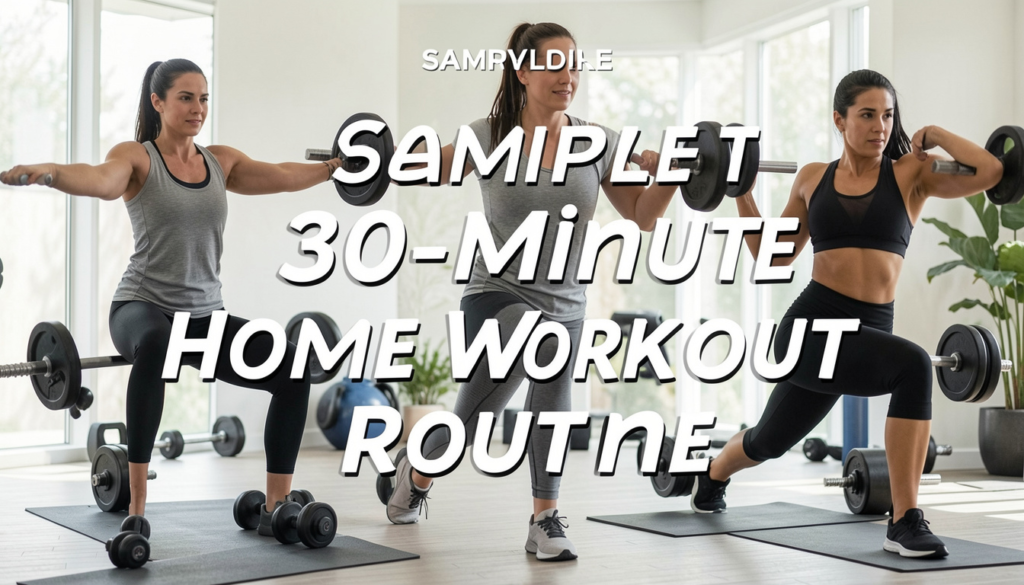
If you’re looking for a simple daily routine, here’s an effective 30-minute workout suitable for most fitness levels.
Warm-Up (5 Minutes)
- March in place – 1 minute
- Arm circles – 1 minute
- Jumping jacks – 1 minute
- Dynamic leg swings – 1 minute
- Light stretching – 1 minute
Main Workout (20 Minutes)
Perform each exercise for 45 seconds, followed by 15 seconds of rest.
- Bodyweight Squats
- Push-Ups
- Lunges
- Mountain Climbers
- Plank
- Jumping Jacks
- Glute Bridges
- Bicycle Crunches
Repeat the circuit 2–3 times, depending on your fitness level.
Cool Down (5 Minutes)
Finish your workout with gentle stretches:
- Hamstring Stretch
- Quadriceps Stretch
- Shoulder Stretch
- Chest Stretch
- Child’s Pose
- Deep Breathing
Cooling down helps reduce muscle soreness and improves flexibility.
Why Home Workouts Are the Future of Fitness
Modern lifestyles demand flexibility, convenience, and affordability. This is why Home Workouts continue to grow in popularity worldwide. With advancements in online fitness coaching, virtual workout classes, and smart fitness devices, exercising at home has never been more accessible.
Home workouts allow individuals to:
- Save time by eliminating travel to the gym.
- Exercise according to their own schedule.
- Customize routines based on personal goals.
- Stay active regardless of weather conditions.
- Involve family members in fitness activities.
Whether you are just beginning your fitness journey or looking to maintain an active lifestyle, home workouts provide a practical and effective solution.
Conclusion
Home Workouts have transformed the way people approach fitness by making exercise more accessible, affordable, and convenient than ever before. You no longer need expensive gym memberships or sophisticated equipment to improve your health, build strength, lose weight, or increase endurance. With dedication, proper planning, and consistent effort, you can achieve remarkable fitness results from the comfort of your own home.
The key to success lies in following a structured workout routine, maintaining a balanced diet, getting adequate rest, and gradually increasing the intensity of your exercises. Remember that fitness is a lifelong journey rather than a short-term goal. Celebrate small achievements, stay motivated, and remain committed to your routine.
Whether you’re a beginner taking your first steps toward a healthier lifestyle or an experienced fitness enthusiast seeking flexibility, Home Workouts offer countless opportunities to stay active and improve your physical and mental well-being. Start today, stay consistent, and enjoy the long-term benefits of a healthier, stronger, and more confident version of yourself.
FAQs
Are Home Workouts effective for weight loss?
Yes. Home Workouts can be highly effective for weight loss when combined with a healthy diet and regular exercise. Cardio workouts, HIIT sessions, and strength training help burn calories, build muscle, and increase metabolism, leading to sustainable fat loss.
Can I build muscle with Home Workouts?
Absolutely. You can build muscle through Home Workouts by using bodyweight exercises, resistance bands, dumbbells, or kettlebells. Applying progressive overload, eating enough protein, and allowing proper recovery are essential for muscle growth.
How often should I do Home Workouts?
For most adults, exercising 4–6 days per week is ideal. Include a combination of strength training, cardio, flexibility exercises, and at least one rest day each week to allow your body to recover and prevent overtraining.
Sleep Tips: 25 Expert Tips for Better Sleep and a Healthier Life (2026 Guide)